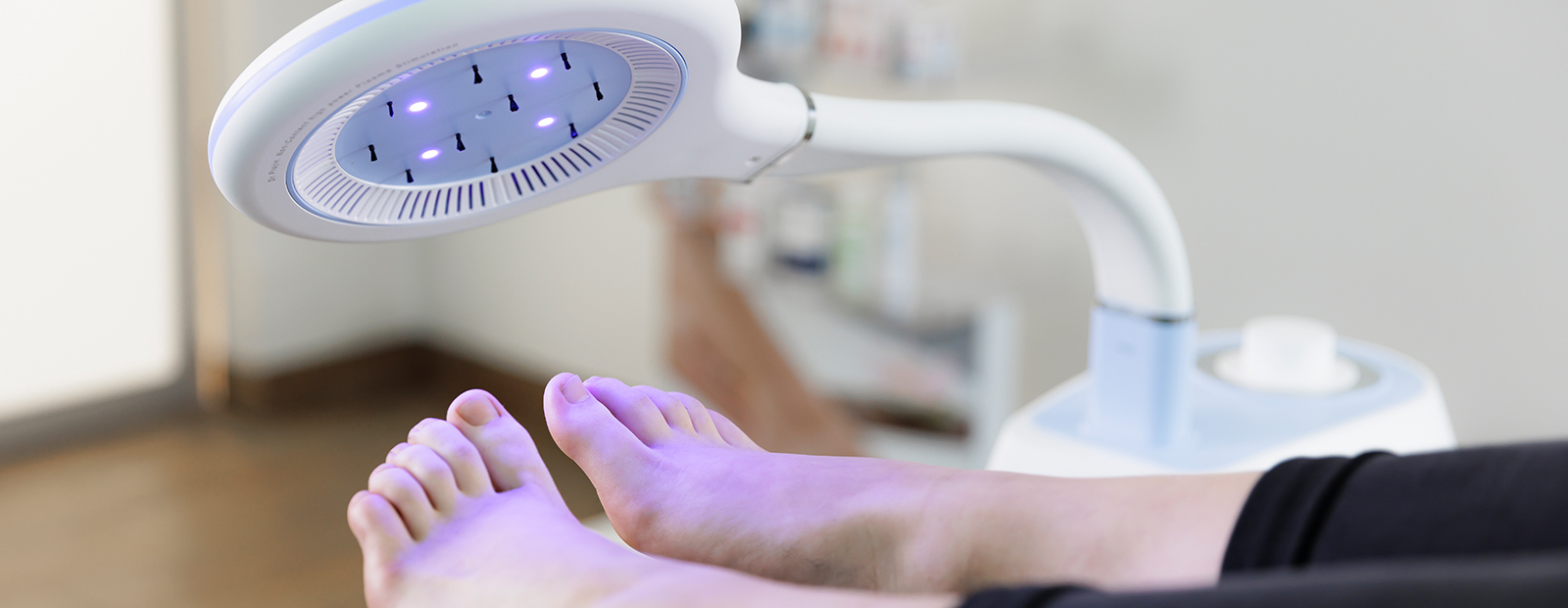
Treatment and photographs: Christiane Schöpe, Podologin, podiatrist, specialist in podiatry, ICW® wound care expert ICW®
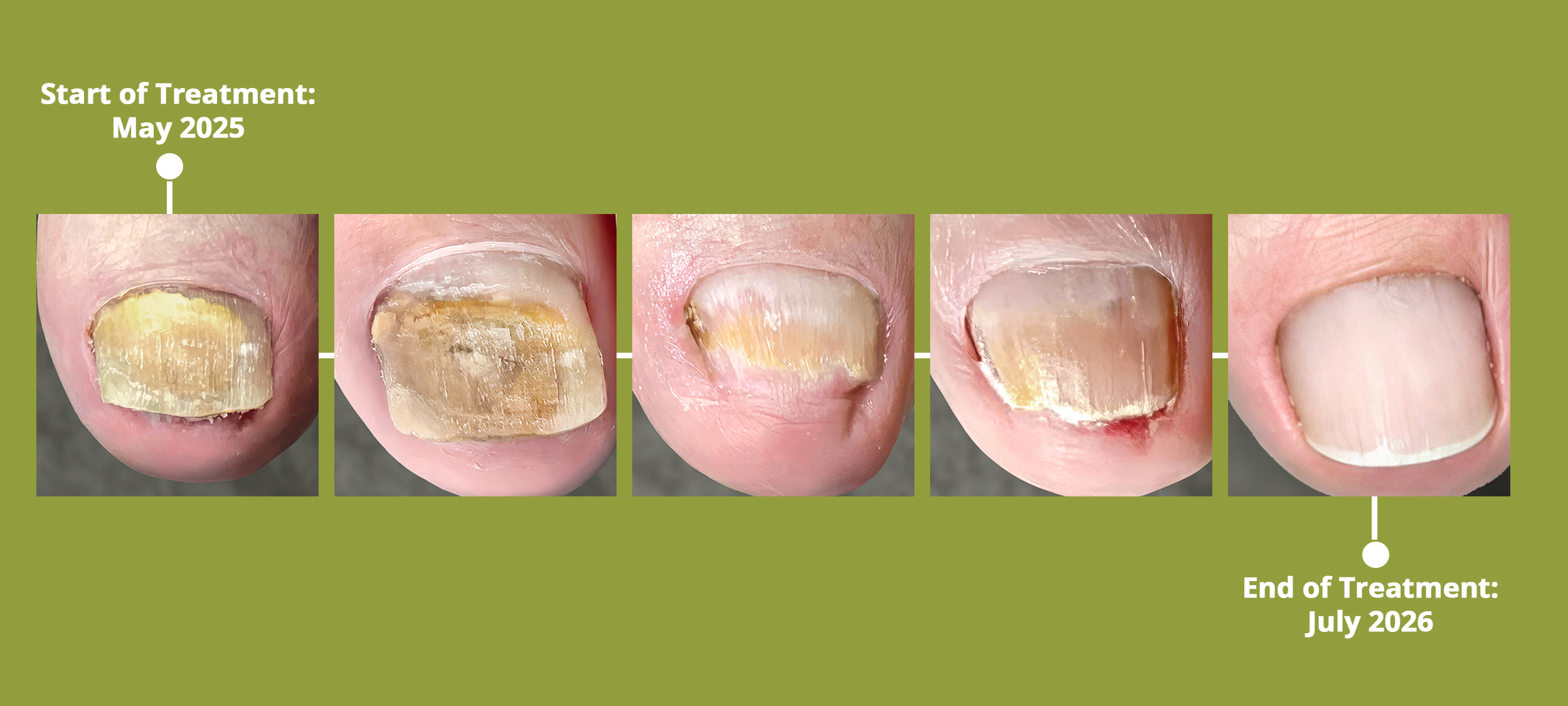
The photographic documentation of the course of treatment is particularly telling: after just a few months, the affected nail plate began to detach, whilst healthy nail tissue grew back. As treatment progressed, the proportion of healthy nail increased steadily. After 14 months, the big toe nail appeared visually normal and was fully regenerated.
The explanation
The success of the treatment cannot be explained solely by the antifungal effect of cold plasma. It is true that the reactive oxygen and nitrogen species (ROS/RNS) contained in the plasma effectively reduce fungi and other microorganisms by impairing their cellular structures and metabolic processes.1
At the same time, scientific studies suggest that, when administered at controlled doses, cold plasma can stimulate regenerative processes in the skin and nails.2,3
This aspect is of particular importance in the case of onychomycosis. Dermatophytes infect keratinised tissues such as nails and utilise keratin as a source of nutrients. In doing so, they release enzymes that alter the structure and function of the tissue. Accompanying inflammatory reactions and damage to the tissue architecture can impair the normal differentiation and proliferation of keratinocytes. As a result, the growth of the nail matrix often slows down, making it more difficult for the nail to regenerate.4,5,6
Cold plasma can support this process in two ways: firstly, it reduces the pathogen load, thereby eliminating a major cause of tissue damage.1 Secondly, low-dose ROS/RNS can act as biological signalling molecules and activate cellular repair and regulatory mechanisms. Among other things, effects on cell communication, microcirculation and the proliferation of keratinocytes – which are responsible for the formation of new nail substance – have been described.2,3,7
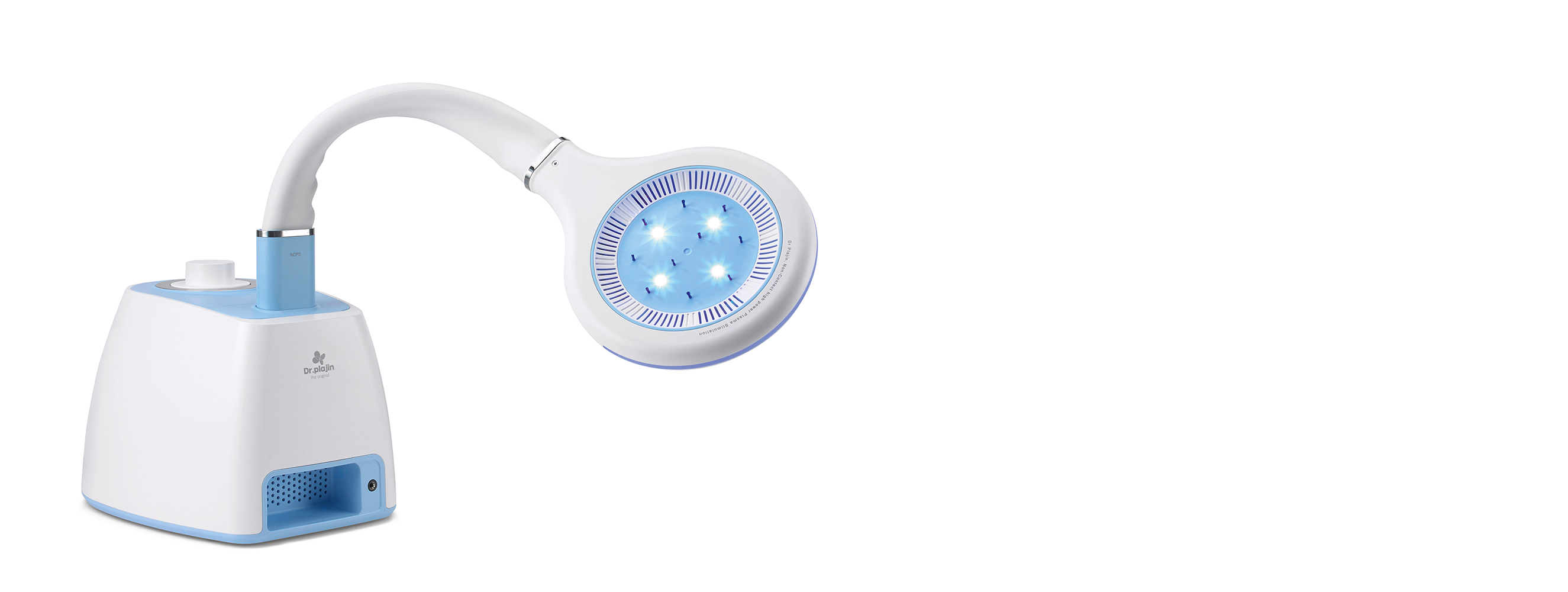
GEHWOL TECH’s patented Dr.plajin process takes a unique approach: free electrons act as redox buffers and help to regulate the oxidative potential of the cold plasma. This preserves the antimicrobial properties whilst simultaneously supporting regenerative signalling processes.

 Your basket is empty.